CONSULTANCY IN TENERIFE SPECIALISING IN COMPANY FORMATION IN THE CANARY ISLAND ZEC ZONE

At Weeks & Co Asesores, we professionally and efficiently establish your business in the Canary Islands Special Zone (ZEC), ensuring a smooth legal process from start to finish. You’ll always have the guidance and support you need, every step of the way.

We guide you from start to finish throughout the entire business incorporation process

What is the Canarian Special Zone (ZEC)?

The Canarian Special Zone, or ZEC, is a low-tax regime approved by the European Union and enshrined in Law 19/1994 of 6 July, amending the Canary Islands’ Economic and Fiscal Regime (REF). It is designed to stimulate economic development in the archipelago. Under the ZEC, companies can operate at a reduced corporate tax rate of 4%, instead of the standard 25% applicable in mainland Spain.

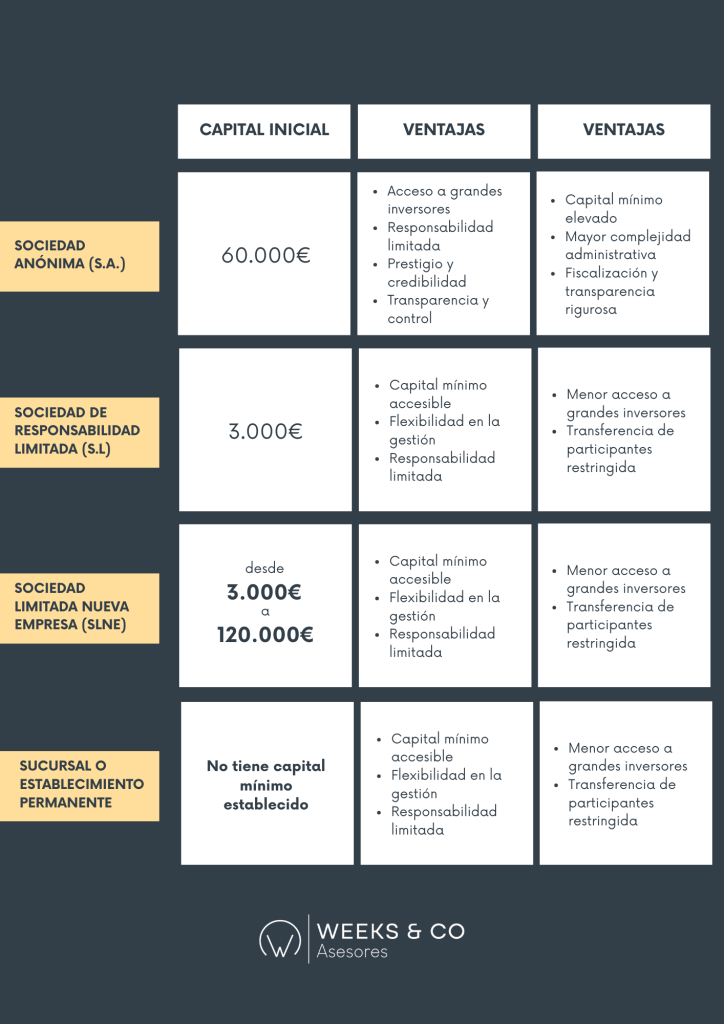
ventajas e incovenientes de las formas jurídicas para constituir tu empresa en la zona zec

Benefits of Operating under the Canarian Special Zone (ZEC)

The Canary Islands Special Zone (ZEC) is positioned as a strategic hub within the European Union, offering highly favourable tax conditions to promote industrial, commercial, or service-based ventures that fall within an approved list of activities and meet specific investment and job creation requirements.

It is worth highlighting that this regime is not only more competitive than alternatives such as Ireland or Andorra, but also offers legal certainty and economic stability, being fully embedded within the regulatory framework of the European Union. In this context, the ZEC represents an outstanding opportunity for businesses and entrepreneurs seeking to reduce their tax burden without forgoing the safeguards inherent to the EU environment.

Thanks to their geographical location, the Canary Islands also benefit from a range of additional fiscal incentives — including a lower IGIC (the local equivalent of VAT) compared to mainland Spain’s VAT, as well as significant subsidies for transport and fuel. These elements further enhance the overall attractiveness of the ZEC.

To provide a comprehensive overview of the advantages available to businesses, the following outline summarises the key benefits of establishing a company within the ZEC regime:

Corporate Tax

At a reduced tax rate of 4%

Exemption from Non-Resident Income Tax

Capital Transfers and Documented Legal Acts

Canary Islands General Indirect Tax (IGIC)

Within the legal framework of the European Union, the Canary Islands offer a secure and reliable environment, with access to double taxation treaties and full fiscal transparency. This is complemented by a 50% tax allowance on the production of tangible goods, positioning the archipelago as a strategic platform for trade and the transfer of services and technology between continents.

Moreover, boasting one of the highest standards of living in Europe, a favourable year-round climate, a highly skilled workforce, modern infrastructure, and a strong commitment to innovation, the Canary Islands provide the ideal setting for the development and consolidation of successful business ventures.

Requirements for Becoming a ZEC Entity

As we can see, the Canary Islands Special Zone (ZEC) offers a highly attractive tax regime within the framework of the Canary Islands Economic and Fiscal Regime (REF). However, in order to access and retain these benefits, companies must comply with a series of strict and strategic obligations that ensure a genuine and sustainable contribution to the archipelago’s economic development.

General Obligations for Companies within the ZEC

  • Registered Office and Economic Activity
    Companies must have their registered office and conduct their main economic activity in the Canary Islands, ensuring that operations related to the ZEC are effectively carried out within the insular territory.
  • Tax Compliance
    It is essential to fulfil all local and national tax obligations, including the accurate and timely submission of tax returns, as well as adherence to applicable accounting and invoicing regulations.
  • Job Creation
    Companies benefiting from the ZEC regime are required to create and maintain a minimum number of jobs in the Canary Islands, with the specific requirement varying depending on the island where the entity is located.
  • Investment in Fixed Assets
    Significant investments in fixed assets must be made within the first two years following registration with the ZEC, with minimum amounts that depend on the island where the company is established.
  •  

It is essential to remember that the Canary Islands Special Zone (ZEC) regime is subject to state supervision by the Spanish Tax Agency (Agencia Estatal de Administración Tributaria, AEAT). Consequently, companies are obliged to report annually on this tax incentive by submitting Form 282, which must be filed alongside the Corporate Tax Return (Form 200).

Financial Management and Compliance

  • Companies established within the ZEC must maintain detailed and separate accounting records for operations conducted under the regime, facilitating audits and ensuring financial transparency.
  • Strict and timely compliance with tax obligations is essential to preserve the fiscal benefits granted by the ZEC regime.
  • Furthermore, any changes or modifications to the economic activities, as well as significant movements in the corporate structure or company management, must be duly justified, approved by the Governing Board, and promptly reported to ensure transparency and regulatory compliance.
  •  

New Authorisation Criteria

With the publication of Circular 1/2024 by the ZEC Consortium, new criteria have been introduced for the registration of companies in the Canary Islands Special Zone. These changes place particular emphasis on ensuring the continuity of economic activities in the Canary Islands and securing an effective contribution to the archipelago’s economic and social development.

Among the key updates is the concept of “previously exercised activities,” which establishes the conditions under which an activity is considered pre-existing and therefore eligible for registration in the ZEC.

Additionally, the employment creation requirements have been clarified, varying by island: a minimum of five jobs in Tenerife and Gran Canaria, and a minimum of three in the smaller islands.

Exemption from the Minimum Investment Requirement

Regarding the investment requirement, there is the possibility to request an exemption, provided certain conditions are met, primarily related to job creation.

In accordance with Royal Decree 1758/2007, registration or continued operation may be authorised for entities that do not meet the established minimum investment, as long as the number of jobs created and the annual average workforce exceed the minimum required.

This exemption is specifically designed to facilitate the establishment and operation of innovative and high-tech companies in the Canary Islands, aiming to promote the development of businesses in strategic sectors such as information technology, telecommunications, and I+D+I

This provision allows for the release of resources, thereby facilitating and encouraging reinvestment in product development and business expansion. Additionally, it helps new companies to adapt swiftly to market conditions and explore strategic opportunities with greater agility.

Legal Forms Permitted for Establishment within the ZEC

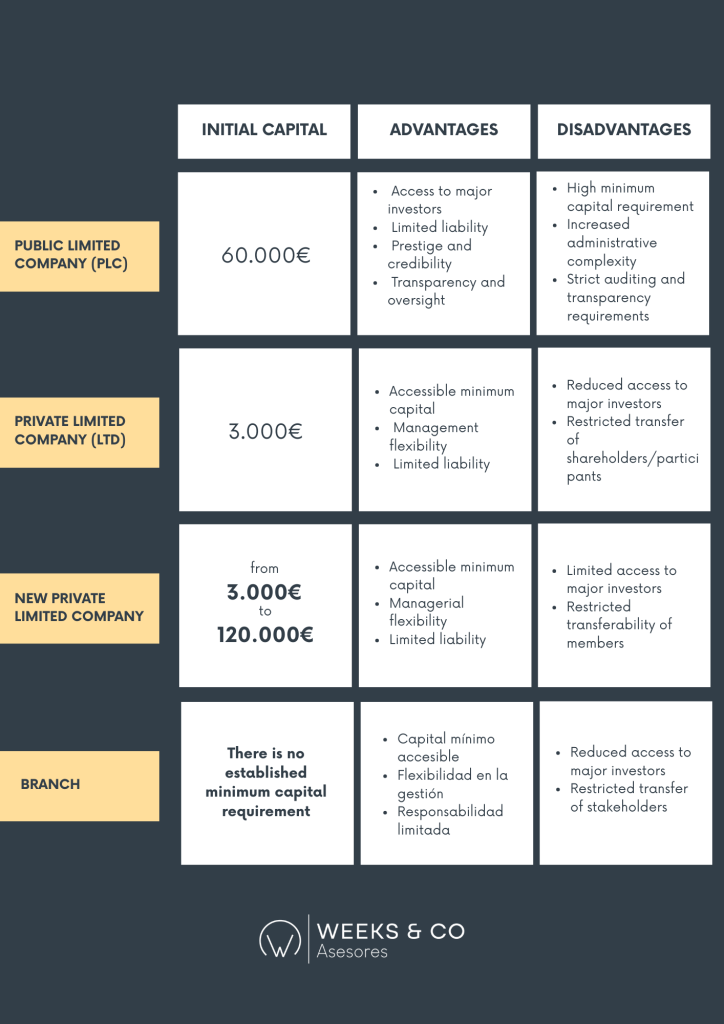
Within the Canary Islands Special Zone (ZEC), it is possible to establish various legal forms to take advantage of its tax benefits. Among the most common are:

This provision allows for the release of resources, thereby facilitating and encouraging reinvestment in product development and business expansion. Additionally, it helps new companies to adapt swiftly to market conditions and explore strategic opportunities with greater agility.

  1. Public Limited Company (S.A.):
    This legal form features share capital divided into shares. Shareholders’ liability is limited to the amount of their contribution, without risking their personal assets.
  2. Private Limited Company (Ltd):
    Similar to a Public Limited Company, but with a lower minimum capital requirement and greater flexibility in the management and administration of the company.
  3. New Enterprise Limited Company (SLNE):
    A variant of the Private Limited Company designed to facilitate the establishment of new businesses, offering a more agile and simplified process.
  4. Branch or Permanent Establishment:
    An extension of a foreign company operating in the Canary Islands, subject to the conditions and benefits established by the ZEC.
Canary Islands ZEC Zone Weeks Advisory

It should be noted that there are other activities explicitly excluded from the scope of the ZEC Zone:

Excluded businesses in the Canary Islands Special Zone (ZEC):

  • Financial and Insurance Services
  • Construction
  • Retail Trade
  • Tourist Accommodation and Catering

It is important to highlight and bear in mind that pure holding companies are excluded, as well as those enterprises which, although domiciled in the Canary Islands, conduct their activities outside the archipelago.

Procedure for Becoming a ZEC-Registered Company

In order for a company to be considered a ZEC entity and benefit from the reduced 4% tax rate, it is essential to first obtain authorisation from the ZEC Governing Board before proceeding with the incorporation of the company or the opening of a branch in the Canary Islands.

This procedure requires the preparation and submission of various documents, including a Descriptive Report of the intended economic activities. This report must demonstrate the viability of the project and provide evidence of the tangible benefits the activity will bring to the Canary Islands.

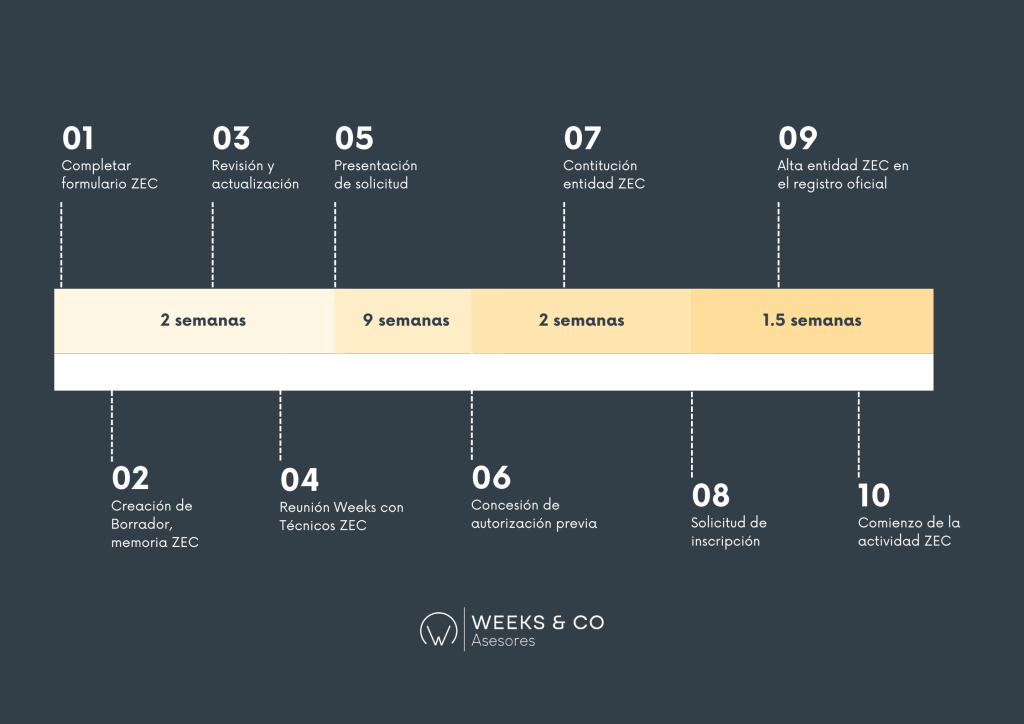
Below is an outline of the methodology and process we follow at WEEKS & CO Asesores to assist you in establishing your company within the ZEC Zone:

Procedimiento para ser empresa ZEC weeks & co asesores asesoría la laguna

Through this procedure, which encompasses a series of actions organised within a dedicated timeline, our aim is to become a reliable support and strategic partner for companies wishing to establish themselves in the Canary Islands Special Zone.

We offer personalised consultancy that supports the company from the planning and incorporation phase through to daily management and regulatory compliance.

Our entire approach is built upon extensive experience and deep knowledge of the tools and processes required to facilitate a successful operation within the ZEC framework.

Obligations and Sanctions

Undoubtedly, to fully benefit from the fiscal and investment advantages offered by the Canary Islands Special Zone (ZEC), companies must comply with a series of specific obligations and maintain rigorous management, which includes:

  • Compliance with initial requirements: Having a registered office and carrying out the main economic activity in the Canary Islands, creating employment, and making investments in fixed assets within the established deadlines.
  • Specific tax obligations: Paying corporate tax at the reduced rate of 4%, as well as complying with the fiscal and accounting regulations set forth by Spanish and Canary Islands authorities.
  • Financial management and reporting: Keeping separate accounting records, submitting tax returns and instalment payments, and notifying any significant corporate changes that might affect compliance with the requirements necessary to maintain fiscal benefits.
  • Compliance with European regulations: Adapting to the applicable European legislation relevant to each activity.

    It is essential to bear in mind that these are the main obligations, but each company must tailor its practices to ensure proper operation. Therefore, it is advisable to stay up to date with current regulations and implement compliance programmes to avoid sanctions and risks, such as:

  • Loss of the reduced tax rate: The primary advantage of the ZEC is paying corporate tax at 4%. Failure to meet the requirements may lead to losing this benefit and being subject to the general rate, which in 2024 stands at 23%.

  • Financial penalties and repayments: Besides reverting to the general tax regime, failure to meet minimum investment obligations may entail repaying the tax differential with late payment interest, significantly increasing the fiscal burden.

  • Fines and revocation of authorisation: Non-compliance may also result in financial penalties and the permanent revocation of the authorisation to operate under the ZEC regime. Additionally, it may lead to increased inspections and audits by tax authorities as a control measure.

Take advantage of the 4% Corporate Tax rate in the Canary Islands!!

At Weeks & Co Asesores, we guide your company to fully capitalise on the fiscal advantages offered by the Canary Islands Special Zone (ZEC), benefiting from the lowest corporate tax rate in Europe.

FAQs

Frequently Asked Questions about the ZEC (Canary Islands Special Zone)

a) ZEC Company Conducting Activities Outside the ZEC Scope

According to Article 31 of Law 19/1994, of 6 July, which modifies the Economic and Fiscal Regime (REF), only those companies that meet the requirements established in section 2 of said article may be registered in the Official Register of ZEC Entities (ROEZEC). Therefore, a ZEC entity may only carry out activities expressly authorised by the Governing Council upon granting of the authorisation. Consequently, the corporate purpose of the ZEC entity must be strictly limited to the activities authorised under this regime.

b) ZEC Company with Permanent Establishments Outside the ZEC

Pursuant to Article 39 of the Development Regulation of Law 19/1994, of 6 July, which modifies the Canary Islands REF, the principle of geographical separation applies. This allows ZEC entities to operate both within and outside the ZEC territory, respecting the general principles of free movement of goods, persons, services, and capital.

Therefore, a ZEC entity may establish permanent establishments (such as branches) outside the territory of the Canary Islands to carry out its activities. However, it must notify the Governing Council in writing of the opening of such establishments. Additionally, these establishments must maintain separate accounting records and apply the corresponding tax rate, which will differ from the rate applicable to the ZEC entity.

A ZEC entity may apply the current regulations on remote working provided that the employees are physically located within the geographical scope of the Canary Islands, regardless of whether they perform their duties via telework.

In other words, a ZEC entity must ensure that its activities are carried out by human resources physically based in the Canary Islands.

The number of employees is calculated by taking the average workforce over the tax period as a reference. This involves adding the total number of employees at the beginning and at the end of the fiscal year, or alternatively summing the monthly totals throughout the year, and then dividing to obtain a representative average.

Yes, it is possible to conduct wholesale trading activities, including triangular operations, provided that current regulations are complied with. This is governed by the seventh final provision of Law 31/2022, of 23 December, on the General State Budget for 2023, and the fourth final provision of Law 38/2022, of 27 December, relating to the establishment of temporary energy levies and credit entities.

Since 1 January 2023, triangular operations may be included in the tax base at the reduced rate of 4%, provided that the requirement is met that commercial operations are carried out within the geographical scope of the ZEC, which implies that:

  • The organisation, management, contracting, and invoicing of operations take place from the Canary Islands.

  • At least 90% of the expenses associated with the operations correspond to material and human resources located in the Canary Islands, excluding the cost of goods, transport, shipping, and other expenses not directly related to the operation.

In general terms, the investment requirement can be materialised through the assets included in groups 20 and 21 of the Spanish General Accounting Plan (Nuevo Plan General Contable, NPGC), that is, both tangible non-current assets and intangible assets. Therefore, intangible assets are included within this requirement.

It is important to note that the committed investment must be effectively made within a maximum period of 2 years, counted from the day following the notification of the company’s registration in the Official Register of ZEC Entities (ROEZEC). Additionally, these assets must be necessary for the development of the activity and physically located in the Canary Islands to comply with the applicable regulations.

Even if the registered office of the ZEC entity is located on a smaller island, the use of ports or airports situated in the capitals of the Canary Islands does not affect its status within the ZEC regime.

However, it is important that the company’s principal activity, as well as its material and human resources, remain based on the island where the registered office is located, in order to comply with the requirements of the Canary Islands Special Zone.

Yes, it is possible to conduct wholesale trading activities, including triangular operations, provided that current regulations are complied with. This is governed by the seventh final provision of Law 31/2022, of 23 December, on the General State Budget for 2023, and the fourth final provision of Law 38/2022, of 27 December, relating to the establishment of temporary energy levies and credit entities.

Since 1 January 2023, triangular operations may be included in the tax base at the reduced rate of 4%, provided that the requirement is met that commercial operations are carried out within the geographical scope of the ZEC, which implies that:

  • The organisation, management, contracting, and invoicing of operations take place from the Canary Islands.

  • At least 90% of the expenses associated with the operations correspond to material and human resources located in the Canary Islands, excluding the cost of goods, transport, shipping, and other expenses not directly related to the operation.

logo weeks & co asesoría la laguna

Keep your business secure and up to date

Accounting | Labour | Tax and Digital Advisory in La Laguna, Tenerife

Weeks & Co: Accounting, Tax, Employment, and Digital Consultancy – On-site in Tenerife with Online Advisory Services Available

Specialists in consultancy for businesses in Spain and the UK

© 2024 Website Developed by Weeks & Co